
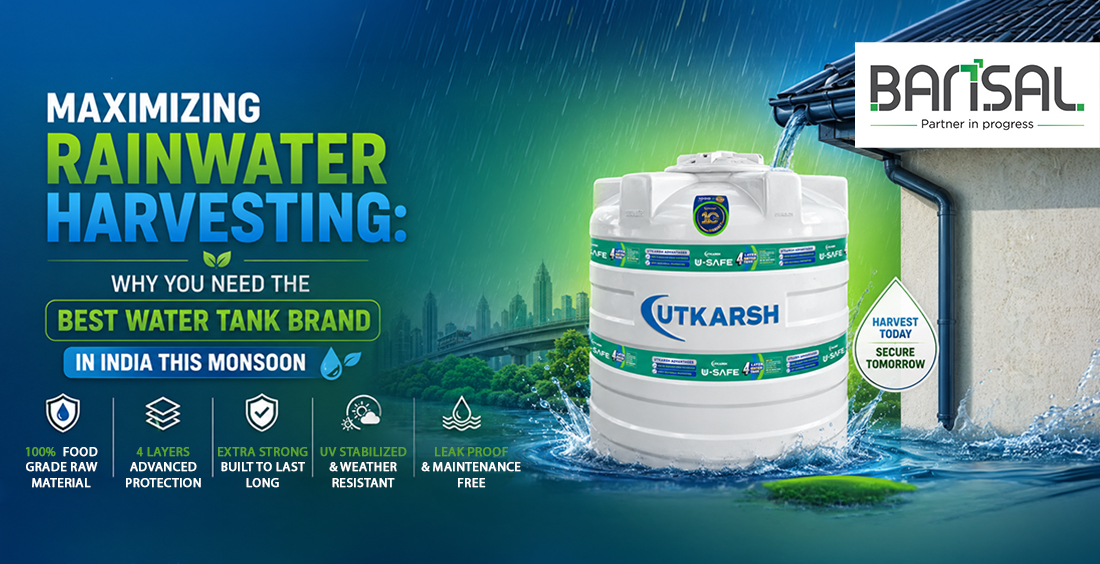
Maximizing Rainwater Harvesting: Why You Need the Best Water Tank Brand in India This Monsoon
Posted on: Jul 14, 2026
The Indian monsoon brings more than just a welcome break from summer heat - it is a massive lifeline. As our cities expand and groundwater tables crash to record lows, water scarcity is no longer a distant headline; it is a daily hurdle for households and businesses alike. Yet, every single year, billions of liters of pure, naturally soft rainwater simply flow down our streets and disappear into the drain.
Rainwater harvesting turns this massive waste into a high-yield asset. By intercepting heavy downpours right at your rooftop, you can easily build an independent, seasonal water buffer. This takes the pressure off unpredictable municipal lines and puts an end to paying premium rates for private water tankers. However, your harvesting system is only as good as the container holding it. To get the most out of the heavy rains, you need a setup built around the best water tank brand in India. Skimping on the reservoir means your hard-earned water could quickly leak away, turn foul, or become a breeding ground for nasty contamination.
The Rise of Rainwater Harvesting and Why the Monsoon is Your Golden Opportunity
Lately, the conversation around water in India has shifted. People are moving past passive awareness and actually installing real infrastructure. Homeowners and industrial plant managers are coming to the same conclusion: relying entirely on rapidly depleting borewells is a losing game. That is why the annual monsoon season is such a prime opportunity to flip the script and aim for self-reliance.
Think about the math. When a heavy downpour hits, a decent-sized roof can pull in thousands of liters of clean water in a matter of hours. This water is naturally soft and lacks the heavy chemical loads or harsh mineral scaling common in groundwater. It is instantly ready for high-volume, non-potable household tasks like flushing toilets, washing clothes, and watering landscaping. With the right domestic filtration system attached, it can even serve as your primary source for cooking and drinking. But remember, monsoon rains hit fast and hard. To catch that sudden rush without structural failures or spills, bringing in the best water tank in India is a baseline requirement for keeping your water security intact.
The Core Elements: Anatomy of a Storage System Designed for Rainwater Collection
- High-Tensile External Walls: When heavy storms hit, the tank fills up fast. This sudden influx creates intense internal hydraulic pressure. A proper tank needs robust, heavy-duty structural ribs to distribute that weight evenly and prevent the side walls from bulging out.
- Multi-Layer UV Stabilization: Rooftop tanks have to sit out in the open, taking a beating from intense sunlight between the rainy spells. Built-in UV stabilization layers prevent the sun's rays from breaking down the polymer chains, keeping the plastic from getting brittle over time.
- Sealed Intake and Overflow Paths: The exact spots where your roof pipes enter the tank - and where excess water flows out - need precise, airtight fittings. This keeps the water moving smoothly while completely locking out windblown dust, dirt, and nesting insects.
5 Reasons the Best Water Tank Brand in India is Essential for Successful Rainwater Harvesting
If you want the water you catch in July to stay crystal clear and usable by October, the manufacturing quality matters immensely. Investing in the best water tank brand in India solves the classic problems associated with long-term water storage:
1. 100% Food-Grade Virgin Plastic to Preserve Purity
Rainwater starts out perfectly pure, but storing it in a cheap tank made from low-grade, recycled plastic ruins it quickly. Toxic chemical additives and heavy metals can easily leach out of bad plastic and taint your water supply. Premium manufacturers use strictly 100% food-grade virgin plastic, keeping your collected resource entirely free from chemical contamination.
2. Multi-Layer Algae Protection to Prevent Odor and Spoilage
Stored water has a natural enemy: sunlight. If light penetrates your tank's walls, it kicks off photosynthesis, leading to rapid algae blooms that turn your water green, slimy, and foul-smelling. High-quality tanks feature pitch-black, opaque inner layers that block out light completely, keeping the water fresh and odor-free for months.
3. Seamless Roto-Molding Tech to Sustain Hydraulic Pressure Shock
Cheap local tanks are usually put together using blow-molding techniques, which leave weak lines and seams right down the sides. When a heavy monsoon storm hits and fills the tank rapidly, that sudden hydraulic shock can easily split those seams wide open. Top brands use seamless Rotational Molding (Roto-Molding) to build a solid, single-body tank with zero weak points.
4. Advanced Thermal Insulation to Keep Harvested Water Cool
Once the monsoon clouds clear, the blistering Indian heat returns. Standard single-layer tanks absorb that heat like an oven, turning your stored rainwater lukewarm. Warm water is the perfect breeding ground for bacteria. Premium multi-layer tanks use insulating layers to reflect the heat, maintaining a stable, cool internal temperature.
5. Threaded Locking Lids to Keep Out Dust and Debris
A simple, loose push-cap lid will eventually blow open or let in dust, dried leaves, and breeding mosquitoes. High-end tanks are designed with heavy-duty, threaded locking lids that screw down tight, forming a secure barrier against everyday environmental mess.
Setting Up for Success: Key Steps to Connect Your Harvest System to the Best Water Tank in India
Building out your system doesn't have to be overly complicated, but you do need to follow a few core steps to make sure you are routing clean water into the best water tank in India:
- Clean the Catchment Area: Your roof is the starting point. Before the first heavy rains hit, sweep away the dried leaves, dirt, and bird droppings so you aren't washing mud straight into your pipes.
- Install a First-Flush Diverter: The very first 10 minutes of a heavy downpour act as a wash cycle for your roof. A first-flush diverter isolates this initial dirty run-off and dumps it, ensuring only the clean water that follows enters your primary tank.
- Choose a Tank with Pre-Molded Inlets: Don't hack away at your tank with a handsaw to make the pipes fit. Buying the best quality of water tank means you get clean, factory-installed, threaded bungs that let you hook up your filters and diverters with zero leaks and no structural damage.
Why Choosing Premium Manufacturing Saves Your Infrastructure from Failure Costs
It is always tempting to look at an unbranded, cheap plastic tank and think you're saving a quick buck upfront. But in the long run, those cheap alternatives usually end up costing double. When a low-grade tank cracks or leaks at the bottom seam, you aren't just out the cost of a new tank; you are also dealing with structural dampness on your roof, ruined ceilings, and a complete waste of your entire harvested water supply.
Going with an established, premium brand like Bansal Water Tanks is simply smart asset management. These units are built using heavy-duty material mixes and robust engineering, and they come backed by real, long-term structural warranties. When you add up the money saved on water tankers, municipal water bills, and avoiding roof repairs, a premium tank pays for itself in just a few seasons.
Conclusion: Securing a Sustainable Future One Drop at a Time
Rainwater harvesting is easily one of the most practical ways to take control of your own resource supply. By catching the monsoon rains as they fall, you buffer your home or business against seasonal water shortages while doing your part to ease the strain on our environment.
Don't let another heavy rainy season slip past you. Make sure your sustainability efforts are backed up by real durability and clean materials. Check out the heavy-duty, multi-layer storage options over at Bansal Poles Water Tank today, and set up your property with the best water tank brand in India to protect your water supply for the long haul.
Frequently Asked Questions
If you are using a premium tank built with 100% virgin food-grade plastic and an opaque inner layer, your harvested rainwater can easily stay clean and odor-free for several months. The specialized black layer prevents sunlight from entering, which stops algae from growing in the first place.
It really comes down to the size of your roof and your daily household needs. For a standard family of 4 to 5 members in India, a tank capacity between 1,000 to 2,000 liters is usually the sweet spot for capturing heavy monsoon downpours effectively without running out of space too quickly.
During the start of the monsoon, you should check and clean the first-flush filter after every major storm, since your roof will be shedding a summer's worth of built-up dust. Once the heavy rains are regular and your roof stays cleaner, checking the filter every two to three weeks is plenty.
Yes, but you shouldn't drink it straight out of the tank. Even though the best quality of water tank keeps the water safe from chemical leaching and algae, rainwater can still pick up fine atmospheric dust or microscopic impurities on its way down. Always pass it through a standard household RO or UV filter before drinking.
No, you shouldn't have to cut anything if you buy the best water tank in India. Premium tanks come straight from the factory with pre-molded, heavy-duty threaded inlets and outlets that are designed to connect perfectly to standard rainwater pipes and diverters.
Premium brands put real money into material quality and engineering. They use high-tensile walls and advanced rotational molding so the tank is a single piece with no weak seams. Cheap local options use recycled plastics and basic blow-molding, which means they easily crack under sudden water weight.

Comments (0)
Post Your Comment