Water storage is an everyday necessity, but choosing the right tank for your home is about more than simply finding one that holds enough water. The tank’s material, construction, durability, and ability to protect stored water from external contamination all matter. A poorly selected tank can create maintenance problems and raise concerns about water quality over time.
This is where modern multi-layer water tanks offer a practical advantage. Designed with multiple layers of material and protective features, these tanks are built to support dependable water storage for households. Bansal Poles Private Limited brings this approach to residential water storage with its range of multi-layer anti-bacterial water tanks, combining functional design with a focus on hygiene and long-term use.
Why Choosing the Right Water Tank for Home Safety Matters
A
water tank for home use is often exposed to changing temperatures, sunlight, dust, and moisture. Although the tank may appear to be a simple storage container, its construction can influence how well it performs over the years.
One of the first things homeowners should consider is the quality of the plastic used in the tank. 100% virgin food-grade plastic, when properly specified and manufactured for potable-water storage, is a preferred material because it avoids the use of recycled plastic that may contain unknown contaminants. Food-contact suitability, however, depends on the actual material, manufacturing process, and applicable testing or certification.
Water storage health hazards can also arise when tanks are not cleaned regularly or when their covers and fittings allow dirt, insects, or other contaminants to enter. Warm, stagnant water may encourage microbial growth, particularly when the tank is exposed to unsuitable conditions.
Another concern sometimes discussed is microplastic leaching. Plastic products can release small particles or chemical constituents under certain conditions. Choosing a tank made from suitable, tested materials and following the manufacturer’s usage instructions can help reduce avoidable risks. It is also important to remember that a food-grade material alone does not guarantee that stored water is safe to drink. Water quality, tank hygiene, and the condition of the supply all play a role.
For these reasons, the right water tank should offer more than capacity. It should be sturdy, hygienic, appropriately designed, and suitable for the intended application.
The Science Behind Multi-Layer Anti-Bacterial Protection
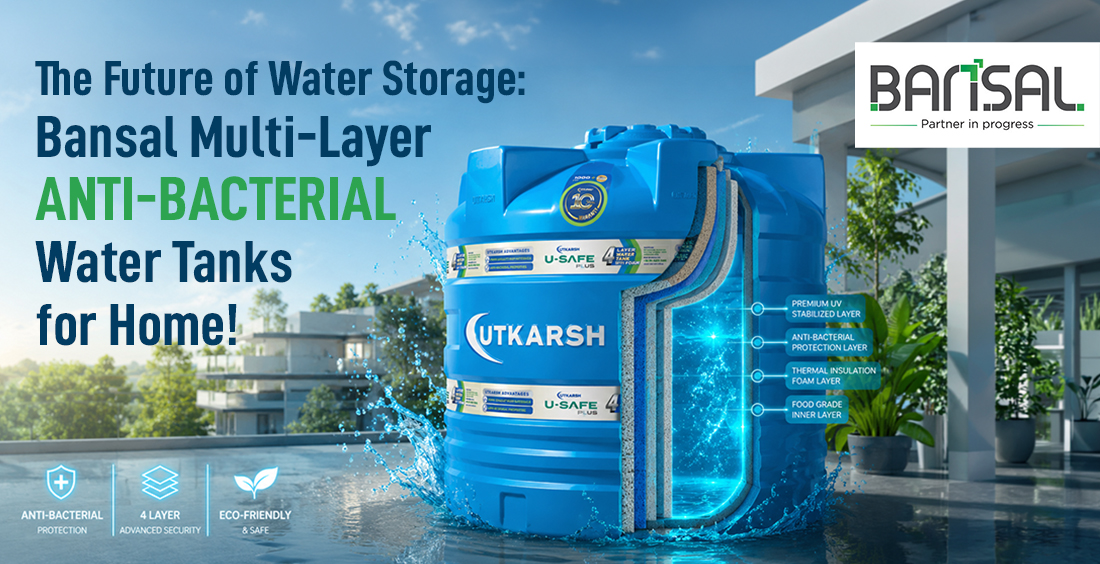
Multi-layer water tanks are constructed using more than one layer of plastic, with each layer serving a particular purpose. The exact number of layers and their composition vary by product. Depending on the design, different layers may contribute to structural strength, light protection, insulation, or the tank’s overall durability.
In an anti-bacterial water tank, the material or design may also incorporate features intended to reduce bacterial growth. Some products use specially formulated materials or additives, while others rely on construction features that limit light penetration and help maintain a more suitable storage environment.
It is important to understand that anti-bacterial protection is not the same as sterilisation. A tank with anti-bacterial properties does not automatically disinfect contaminated water. Safe storage still requires clean incoming water, a properly closed tank, regular inspection, and periodic cleaning.
A multi-layer structure can also offer practical benefits. For example, an outer layer may help protect the tank from environmental exposure, while an inner layer is designed for contact with stored water. Intermediate layers may contribute to strength or thermal performance. The actual benefits depend on the manufacturer’s specifications and the quality of the construction.
For homeowners, the main advantage of this technology is a more considered approach to water storage. Instead of treating the tank as a basic container, multi-layer technology focuses on the material, structure, and conditions that influence everyday performance.
What Makes Bansal Poles Limited Stand Out Among Water Tank Manufacturers?
When comparing
water tank manufacturers, homeowners should look beyond price and storage capacity. Material quality, construction, product design, after-sales support, and suitability for local conditions are all useful factors to consider.
Bansal Poles Limited offers multi-layer anti-bacterial water tanks designed for residential water storage. The product range can be explored through the company’s dedicated Bansal Poles water tank product page.
A multi-layer tank can be a useful choice for households seeking a balance between durability and water-storage hygiene. However, the right choice should always be based on the product’s documented specifications rather than on broad claims alone.
Before purchasing, homeowners should check the tank’s construction, material details, available capacities, warranty conditions, and installation recommendations. They should also confirm whether the product is suitable for drinking-water storage and whether the relevant product documentation supports any anti-bacterial or food-contact claims.
This approach helps buyers make an informed decision and ensures that the selected tank meets the practical requirements of their household.
Buying Guide: Selecting the Best Water Storage Tank in India for Your Household
Finding the best water storage tank in india depends on the needs of your home. A tank that works well for a small family may not be suitable for a larger household or a property with irregular water supply.
Here are some important factors to consider:
1. Choose the right capacity
Start by estimating the household’s daily water requirement. Consider the number of residents, cooking, bathing, cleaning, and the reliability of municipal or borewell supply. A larger tank is not always better if there is limited space or insufficient water turnover.
2. Understand 3-layer vs 4-layer tank construction
The difference between a 3-layer and 4-layer tank is not simply the number of layers. The material used in each layer, the thickness, manufacturing quality, and purpose of the construction matter more. Compare the actual specifications instead of assuming that a higher layer count automatically means better performance.
3. Check material quality
Look for suitable virgin food-grade material where potable-water storage is intended. Ask for product documentation and confirm that the tank is designed for the type of water it will store.
4. Review IS 12701 compliance
IS 12701 is an Indian Standard associated with rotationally moulded polyethylene water storage tanks. If a manufacturer claims compliance, buyers should check the relevant product documentation and whether the specific tank meets the applicable requirements. A general reference to a standard should not be treated as proof of certification.
5. Consider installation and maintenance
The installation surface should be level, stable, and capable of supporting the tank when full. Keep the tank covered, inspect the inlet and outlet fittings, and clean it at suitable intervals. Regular maintenance remains important, even when the tank has anti-bacterial features.
These checks can help households select a reliable water tank for home use without relying only on marketing claims.
Conclusion
Choosing a water tank is an important decision for every household. Multi-layer construction, suitable food-grade materials, and anti-bacterial design features can support a more dependable water-storage solution when combined with proper cleaning and maintenance. Bansal Poles offers multi-layer anti-bacterial water tanks for homeowners looking for practical storage options.


Comments (0)
Post Your Comment