
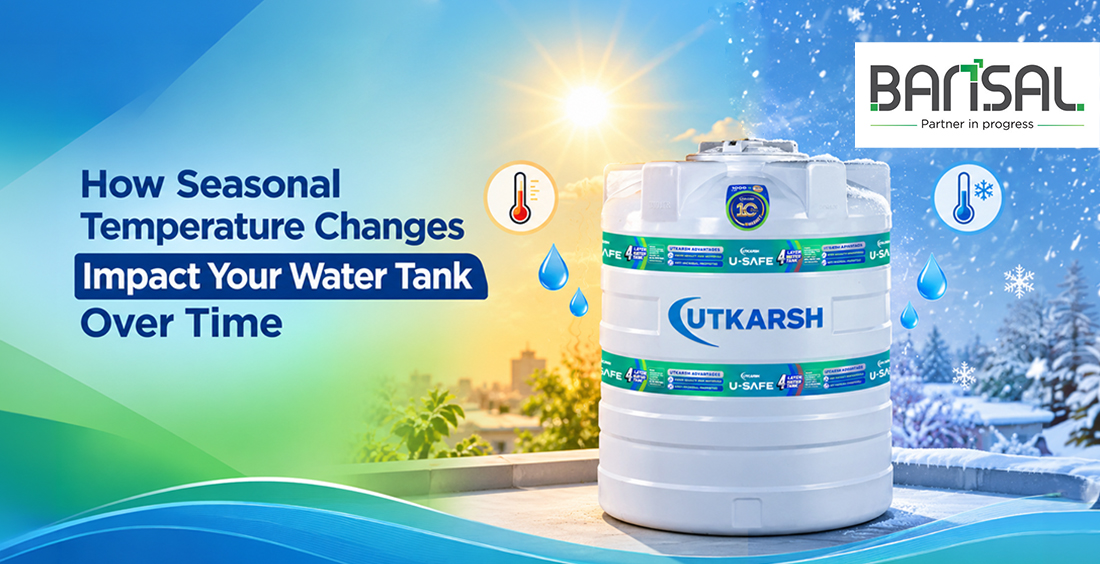
How Seasonal Temperature Changes Impact Your Water Tank Over Time
Posted on: Oct 23, 2026
A rooftop water tank has to deal with conditions that most indoor fixtures never experience. In India, a tank can be exposed to intense summer heat, strong sunlight, heavy monsoon rain and cooler winter temperatures within the same year.
Yet, when buying a tank, most homeowners focus mainly on capacity and price. The material and ability to handle repeated temperature changes often get less attention.
This matters because plastic expands when heated and contracts as it cools. Repeated cycles can gradually put stress on the material, fittings and joints. Choosing the best quality of water tank from dependable water tank manufacturers can therefore make a significant difference to its service life and performance.
The Science of Seasonal Wear: What Hot & Cold Cycles Do to Rooftop Tanks
Summer Extremes (UV & Photodegradation):
Continuous exposure to sunlight can affect plastic over time, particularly when the material does not have adequate UV protection. UV radiation can gradually reduce the flexibility of plastic, causing surface fading, chalking and, eventually, increased brittleness.
The water inside the tank can also become considerably warmer during hot afternoons. A tank with better thermal protection can help reduce the rate at which heat reaches the stored water.
Thermal Shock (Day vs. Night Expansion):
Temperature does not remain constant throughout the day. A tank may heat up considerably under direct sunlight and then cool down after sunset. This repeated expansion and contraction places ongoing stress on the tank material.
Over many cycles, poorly manufactured tanks may become more vulnerable to cracks, particularly around fittings, corners or areas where stress is concentrated.
Monsoon & Winter Contraction:
Monsoon rain can rapidly cool a tank that has been exposed to strong sunlight. This creates another cycle of expansion and contraction.
During winter, lower temperatures can make some plastics less flexible. While normal Indian winters are unlikely to freeze a rooftop tank, repeated cooling can still contribute to material fatigue over a long period.
The Hidden Consequences of Temperature-Damaged Water Storage
The effects of seasonal wear are not always immediately visible.
- Structural Failure & Sudden Ruptures: Small cracks can gradually become larger under the constant pressure of stored water. A leaking tank can also cause dampness and damage to the rooftop or surrounding structure.
- Algal Blooms from Warped Lids: A damaged or poorly fitting lid can allow sunlight, dust, insects and other contaminants to enter the tank. If sunlight reaches stored water, it can also encourage algae growth.
- Unusable Water Temperatures: Single-layer tanks exposed to direct summer sunlight can make stored water uncomfortably warm. This can be particularly noticeable when water is used during the afternoon.
Engineering Defense: What Defines the Best Quality of Water Tank for Extreme Climates?
So, what should you actually look for when choosing the best quality of water tank?
Advanced Multi-Layer Co-Extrusion:
A well-designed multi-layer tank can provide different functions through its construction.
- Outer Layer: A UV-stabilised outer layer helps protect the tank material from prolonged sunlight exposure.
- Middle Insulation Layer: An insulating layer can slow down heat transfer and help moderate changes in water temperature.
- Inner Layer: A food-grade inner layer is important for safe storage of water intended for household use.
Rotational Molding (Roto-Molding) vs. Blow Molding:
Manufacturing technique also matters. Rotational moulding can produce tanks with a seamless, consistent structure without welded seams. Uniform construction can help the tank handle pressure and temperature-related movement more reliably.
High Environmental Stress Crack Resistance (ESCR):
Good-quality virgin polymer can offer better flexibility and resistance to environmental stress cracking than inferior or heavily recycled material. This becomes particularly important when the tank is exposed to repeated outdoor temperature cycles.
Why Discerning Buyers Turn to Specialized Water Tank Manufacturers
Price is important, but choosing a tank purely because it is cheap can prove expensive later. Inferior raw materials, inconsistent wall thickness and poor manufacturing controls can reduce the lifespan of a tank.
Established water tank manufacturers generally have better control over raw material quality, moulding processes, wall thickness and product testing.
This is where Bansal Poles Water Tanks can be considered for homeowners and builders looking for durable storage solutions. The tanks are manufactured using 100% virgin, food-grade material, with a focus on reliable construction and long-term use.
Explore Bansal Poles Water Tanks to learn more about the product and its construction.
Practical Checklist: Protecting Your Rooftop Water Tank from Seasonal Stress
A good tank still needs proper installation and maintenance.
- Ensure Proper Base Support: Place the tank on a level, strong and properly finished platform. Uneven support can create stress points when the tank is filled.
- Flexible Pipe Connections: Avoid putting excessive pressure on inlet and outlet connections. Properly installed flexible connections can accommodate minor movement and reduce stress on fittings.
- Periodic Visual Audits: Check the tank before and after extreme weather. Look for cracks, surface chalking, lid damage, unusual deformation or leakage around fittings.
A few minutes of inspection can help identify a small problem before it turns into an expensive repair.
Conclusion
Weather is something we cannot control, but we can choose storage solutions that are designed to handle it. A rooftop water tank faces sunlight, heat, rain and temperature changes throughout the year, so its material and construction deserve careful attention.
Instead of choosing a tank only on the basis of price, look for quality raw materials, reliable manufacturing and protection against outdoor conditions. Choosing the best quality of water tank can mean better durability, fewer replacement concerns and more dependable water storage.
Explore Bansal Poles and choose a storage solution designed with quality and long-term performance in mind.
Frequently Asked Questions
Long-term UV exposure can gradually break down polymer chains in plastic. Without adequate UV stabilisation, the material may lose flexibility, become discoloured or develop a brittle surface over time.
Multi-layer construction, particularly when it includes an insulating layer, slows the transfer of heat from the surroundings to the stored water. This can help reduce rapid temperature changes during hot weather.
Low-cost tanks may use inferior raw materials or have inconsistent wall thickness and inadequate UV protection. Repeated heating and cooling can increase stress on such materials and contribute to premature cracking.
Check the raw material, food-grade certification, UV protection, manufacturing method, wall consistency, warranty and overall product construction. A manufacturer's experience and quality-control practices are equally important.
A well-designed multi-layer tank can be a practical choice for Indian conditions because it can provide better UV protection and reduce heat transfer. However, material quality and manufacturing standards should also be considered.


Comments (0)
Post Your Comment