
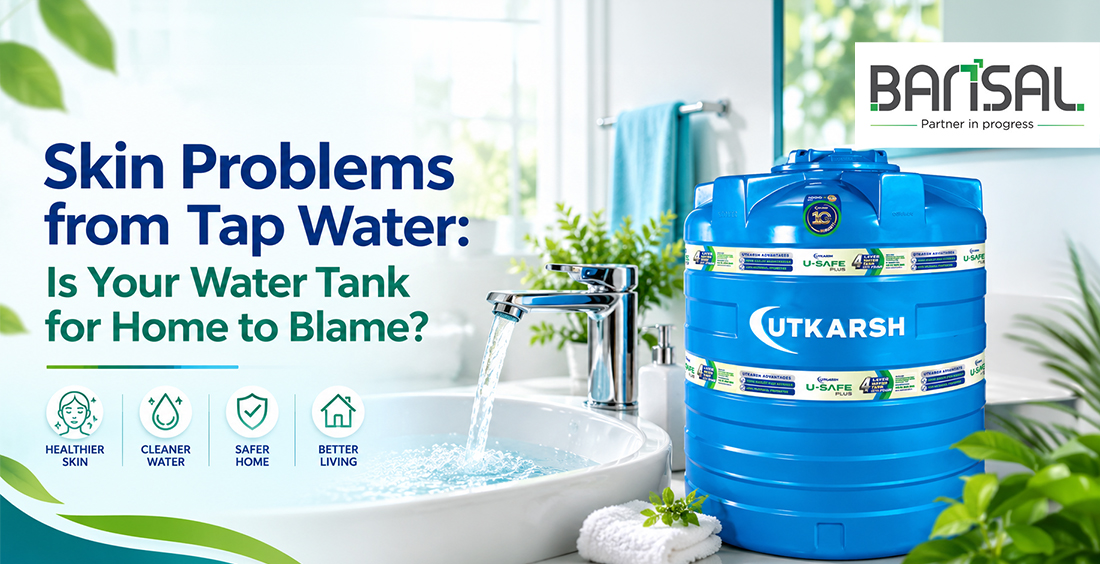
Skin Problems from Tap Water: Is Your Water Tank for Home to Blame?
Posted on: Oct 23, 2026
You may spend a lot on cleansers, moisturisers and shampoos, yet your skin can still feel dry or irritated after a shower. Before blaming your skincare routine or the weather, it may be worth looking at something you use every day: your water.
Many homeowners think about the quality of their municipal or groundwater supply but overlook the storage system. Water can remain in an overhead water tank for home for hours or even days before reaching your bathroom.
If a tank is poorly maintained, damaged or made from unsuitable material, sediment, algae and other contaminants can accumulate. While a water tank is not necessarily the direct cause of acne, dandruff or eczema, poor water storage can affect water quality and may aggravate irritation in people with sensitive skin.
That makes choosing the right tank and maintaining it properly an important part of household hygiene.
How an Unclean or Low-Quality Water Tank Harms Your Skin & Scalp
Your skin and scalp come into contact with household water every day. If water quality deteriorates during storage, it can affect how comfortable your skin feels after bathing.
Algal Growth & Bacterial Biofilm
When sunlight enters a tank and water remains stored for long periods, conditions can become favourable for algae and microbial growth. Poorly cleaned tanks may also develop deposits or biofilm on internal surfaces.
This does not mean tank water directly causes acne or fungal infections. However, poor water hygiene can be an additional concern for people with sensitive or already irritated skin.
Sediment & Rust Accumulation
Dust, soil, minerals and other particles can settle at the bottom of a water tank. Older plumbing can also introduce rust and deposits into the water.
Cloudy water, visible particles or sediment around taps and showerheads can be warning signs. Regular cleaning and appropriate filtration can help reduce these problems.
Chemical Leaching (Low-Grade Plastic)
The material used to manufacture a water tank matters. Poor-quality or unsuitable plastic can deteriorate over time, particularly when exposed to outdoor conditions.
For household water storage, look for tanks made from 100% virgin, food-grade material and check the manufacturer's specifications. This helps ensure that the tank is designed appropriately for storing household water.
Skin Barrier Disruption
The skin has a natural protective barrier. Water quality, hard water, temperature and exposure to certain substances can all influence how the skin feels after bathing. If your skin regularly feels tight or irritated after a shower, water quality may be one factor worth investigating.
Warning Signs: Is Your Overhead Tank Compromising Your Water Quality?
Your household water can provide some useful clues about possible storage problems.
Visual & Sensory Checks:
Look for:
- Musty, earthy or unusual smells.
- Cloudy, yellowish or discoloured water.
- Fine sediment around taps or showerheads.
- Visible particles in buckets or bathroom fittings.
- Noticeable changes in water quality after storage.
Itching alone does not prove that the tank is contaminated, as skin irritation can have several causes.
Tank Physical Assessment:
Inspect the tank periodically for:
- Cracks or leaks.
- A loose or damaged lid.
- Algae or deposits around the opening.
- Significant fading or deterioration.
- Sludge or sediment inside the tank.
A properly fitted lid helps prevent dust, insects and other external contaminants from entering the tank.
What Defines the Best Quality of Water Tank for Skin & Household Health?
When looking for the best quality of water tank, do not focus only on price or capacity. Material, construction and protective features are equally important.
100% Virgin Food-Grade Polymer
For household water storage, food-grade material is an important consideration. Virgin polymer provides consistent material quality and is widely used for water-storage applications.
Bansal Poles Water Tanks are made using 100% virgin, food-grade material, according to the manufacturer.
Multi-Layer UV Stabilization
Overhead tanks are constantly exposed to sunlight. UV protection helps the tank withstand prolonged outdoor exposure and reduces material degradation.
Limiting light penetration can also help reduce conditions that support algae growth.
Anti-Bacterial / Anti-Microbial Inner Layer
Some modern tanks incorporate antimicrobial or anti-algae protection into their construction. These features can support hygienic water storage but do not replace regular cleaning.
Bansal Poles highlights antimicrobial, anti-fungal and anti-algae protection in its water tank range.
Thermal Insulation
Rooftop tanks can become very hot during Indian summers. Insulated tank designs can slow down heat transfer and help maintain a more stable water temperature.
This can be particularly useful for homes in hot climates.
Airtight Threaded Lids
A secure lid helps keep out dust, insects, leaves and other external contaminants. It also reduces the risk of accidental contamination from the surrounding environment.
Solution: Upgrade to Pure Storage with Bansal Poles Water Tanks
Maintenance Checklist: How to Keep Your Home’s Water Clean
- Periodic Desludging: Clean the tank at least twice a year. Homes with high-sediment water may need more frequent cleaning.
- Lid Inspection: Check that the lid fits securely after every cleaning or inspection.
- Plumbing Overhauls: Inspect inlet and outlet pipes regularly. Sediment filters or strainers may also help where appropriate.
- Know When to Replace: Replace the tank if you notice cracks, leaks, significant deterioration or recurring contamination that cannot be resolved through cleaning.
Conclusion
Frequently Asked Questions
Poor-quality or contaminated water may irritate a sensitive scalp, but dandruff and hair loss have many possible causes. A dirty tank should not automatically be considered the cause.
Multi-layer tanks can provide benefits such as UV protection, durability and insulation. The ideal choice depends on your climate, water-storage requirements and product specifications.
A residential tank should generally be cleaned at least twice a year. More frequent cleaning may be needed when the incoming water contains significant sediment.
For household water storage, 100% virgin, food-grade polyethylene is a preferred material. Buyers should also check the manufacturer's specifications and quality standards
Look for food-grade material, UV protection, strong multi-layer construction, a secure lid, suitable capacity and insulation if required. Regular maintenance is equally important.


Comments (0)
Post Your Comment