
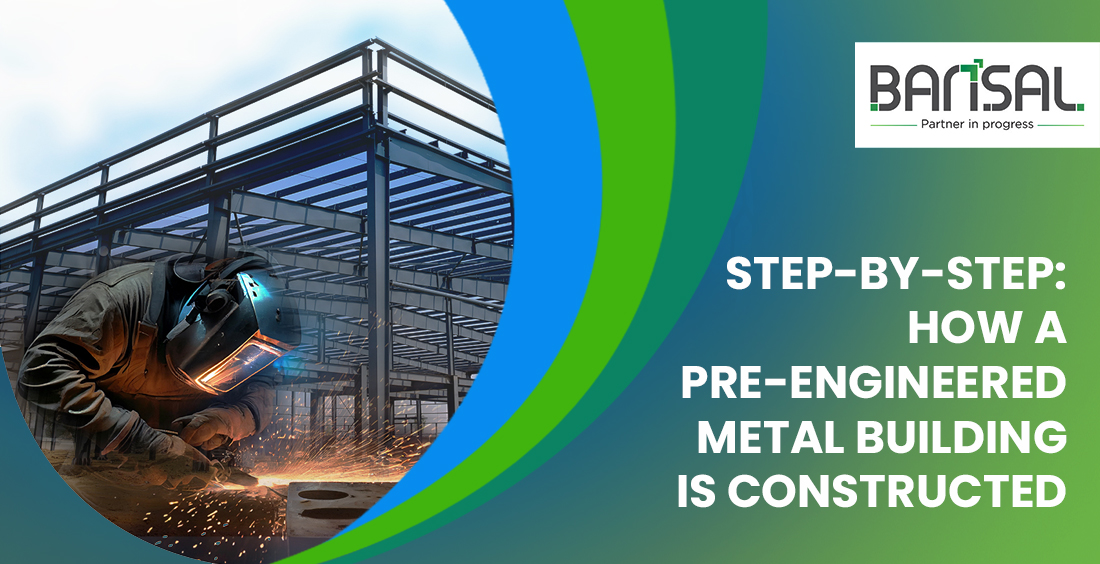
Step-by-Step: How a Pre-Engineered Metal Building is Constructed
Posted on: Jun 14, 2025
Summary
This blog explains what a pre-engineered metal building is and how it is constructed step by step. It covers planning, design, manufacturing, transportation, on-site assembly, and final handover. The blog also explains why a pre-engineered steel building is faster, stronger, and more cost-effective than traditional construction. It highlights how Bansal Poles Limited delivers customized and durable PEB solutions for industrial and commercial projects.
Introduction
If you have ever seen a warehouse,
factory, or industrial shed come up surprisingly fast, it is most likely a pre-engineered
metal building. These buildings are changing the way industries build
in India. They are fast to construct. They are cost-efficient. They are strong
and long-lasting.
A pre-engineered
steel building is designed and manufactured in a factory. It is then
assembled on-site in a planned sequence. This method reduces delays, waste, and
cost overruns.
At Bansal Poles Limited, we have years of experience in delivering
reliable pre-engineered metal buildings for different industries. In this blog,
we explain the complete construction process step by step.
What Is a Pre-Engineered Metal Building?
A pre-engineered metal building is a steel structure that is
designed, fabricated, and engineered before reaching the construction site.
Each component is made with precision. Each part fits perfectly during
assembly. Unlike conventional RCC buildings, a pre-engineered steel building uses optimized steel sections. This
reduces excess material. It also improves strength and performance.
Step 1: Understanding Client Requirements
Every successful pre-engineered metal
building begins with proper planning. Before design work starts, we discuss:
●
Type of building required
●
Usage of the structure
●
Clear span and height
●
Load requirements
●
Location and soil conditions
●
Ventilation and insulation needs
This step ensures the building matches
business needs perfectly.
Step 2: Design and Engineering
This is one of the most important stages
of a pre-engineered steel building. Our in-house engineers use advanced design
software to create:
●
Structural drawings
●
Load calculations
●
Wind and seismic analysis
●
Roof slope design
●
Column and beam sizes
Each design follows Indian and
international safety standards. This ensures the building remains strong for
decades.
Step 3: Manufacturing of Steel Components
Once the design is approved,
manufacturing begins at our factory. The following components are fabricated:
●
Primary frames
●
Columns and rafters
●
Secondary members
●
Roof and wall panels
●
Bracings and fasteners
High-grade steel is used for durability
and corrosion resistance. Each component is cut, welded, and drilled with
precision. All parts are labeled for easy identification at the site.
Step 4: Quality Checks and Packing
Quality control is critical for every
pre-engineered metal building.
Before dispatch:
●
Dimensions are verified
●
Welding strength is checked
●
Surface finishing is inspected
After approval, components are packed
carefully to prevent damage during transport.
Step 5: Transportation to Site
The pre-engineered steel building
components are transported in a planned sequence.
This reduces:
●
On-site congestion
●
Material handling errors
●
Construction delays
Pre-fabrication also ensures minimal
material wastage.
Step 6: Site Preparation and Foundation Work
While materials are in transit,
foundation work starts at the site.
This includes:
●
Site leveling
●
Excavation
●
Concrete foundation
●
Anchor bolt placement
Accurate foundation alignment is crucial
for smooth steel erection.
Step 7: Erection of Steel Structure
This is the most visible stage of a pre-engineered metal building.
The erection process includes:
1. Column installation
2. Rafter and beam placement
3. Secondary framing installation
4. Bracing alignment
Cranes and trained professionals ensure
fast and safe erection.
Compared to traditional construction,
this stage takes much less time.
Step 8: Roof and Wall Installation
Once the steel frame is ready:
●
Roof sheets are installed
●
Wall panels are fixed
●
Insulation is added if required
●
Gutters and flashings are placed
This step protects the building from
heat, rain, and dust.
Step 9: Finishing and Final Inspection
Before handover:
●
Structural safety is checked
●
Alignment is verified
●
Finishing quality is inspected
The pre-engineered steel building is now ready for use.
The Evolving Landscape of PEB Construction
Partnering with an Experienced PEB Construction Company
Advantages of Pre-Engineered Metal Buildings
Choosing a pre-engineered metal building
offers many benefits:
●
Faster construction time
●
Lower overall project cost
●
Strong and durable structure
●
Flexible design options
●
Easy future expansion
●
Low maintenance requirements
These advantages make pre-engineered
steel buildings ideal for warehouses, factories, logistics hubs, and commercial
spaces.
Why Choose Bansal Poles Limited?
A PEB project is a long-term investment.
Choosing the right manufacturer matters.
At Bansal Poles Limited, we offer:
●
Decades of industry experience
●
In-house design and fabrication
●
State-of-the-art manufacturing
facilities
●
High-quality steel
●
Transparent pricing
●
On-time project delivery
From small PEB sheds
to large industrial complexes, we deliver reliable solutions every time.
Final Thoughts
A pre-engineered metal building is a
smart solution for modern construction needs. It saves time. It reduces cost.
It offers strength and flexibility.
If you are planning your next industrial
or commercial project, a pre-engineered
steel building from Bansal Poles Limited ensures long-term value and
performance.
Frequently Asked Questions
A pre-engineered metal building is a
steel structure designed and fabricated in a factory and assembled on-site
using pre-made components.
A pre-engineered steel building is faster to construct, lighter in weight, and more cost-efficient than RCC structures
Construction time is usually 30–50%
faster compared to traditional buildings, depending on project size.
Yes. Design, size, height, insulation,
and layout can be fully customized.
Yes. Pre-engineered steel buildings allow
easy future expansion.
Yes. High-quality steel ensures long life
and resistance to harsh weather conditions.
Warehousing, manufacturing, logistics,
retail, aviation, and agriculture sectors commonly use PEBs.
No. They require minimal maintenance
compared to conventional buildings.
Bansal Poles Limited offers end-to-end
solutions with quality assurance and industry expertise.
The timeline depends heavily on the complexity of the design, clear span requirements, and site readiness. However, because fabrication occurs concurrently with foundation work, overall peb construction is typically completed up to 50% faster than traditional brick-and-mortar builds.
Look for a peb construction company that provides comprehensive, end-to-end services—including in-house structural engineering, state-of-the-art manufacturing facilities, and a proven track record of industrial deliveries. It is also crucial to verify that they source high-grade, corrosion-resistant steel to ensure long-term structural integrity.
Comments (0)
Post Your Comment