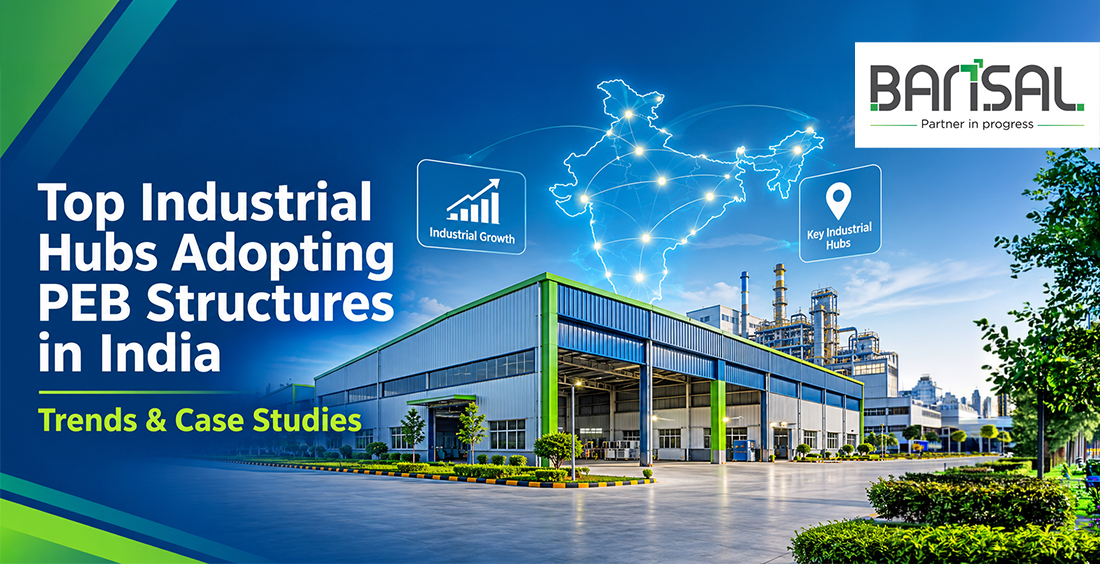
Top Industrial Hubs Adopting PEB Structures in India

Top Industrial Hubs Adopting PEB Structures in India

Posted on: Nov 17, 2026

India's industrial sector is growing, and businesses are increasingly looking for construction solutions that save time without compromising on quality. This has brought PEB Structures (Pre-Engineered Buildings) into focus across manufacturing, warehousing, logistics and infrastructure. 

Unlike conventional construction, PEB systems use factory-fabricated steel components that are assembled at the project site. This helps reduce construction time and improves consistency. 

In Eastern India, expanding industrial activity across West Bengal, Odisha, Jharkhand, Bihar and Assam is creating fresh demand for PEB Building solutions, particularly for factory sheds, warehouses and production facilities.

Key Advantages Driving PEB Building Adoption in Eastern India

Industrial buildings need to accommodate machinery, storage, movement of materials and day-to-day operations. PEB Structures offer flexibility to meet these requirements while keeping construction practical and efficient.

Some important advantages of pre-engineered buildings include:
  • Faster construction: Components are fabricated off-site while foundation work progresses simultaneously, reducing the overall project timeline.
  • Better space utilisation: Clear-span designs provide larger column-free areas, making them suitable for warehouses and industrial peb shed applications.
  • Design flexibility: Dimensions, roof configurations, mezzanine floors and crane-supporting systems can be customised according to operational needs.
  • Cost efficiency: Optimised steel consumption and reduced on-site activities can help manage construction costs.
  • Durability: Appropriate protective coatings help steel structures withstand corrosion and environmental exposure.
  • Future expansion: Buildings can be planned to accommodate additional space as business requirements change.
These benefits are particularly relevant in Eastern India, where rainfall, humidity, wind exposure and varying site conditions influence industrial construction decisions.

Industrial Growth Across West Bengal, Odisha, Jharkhand, Bihar & Assam

Eastern India has several established industrial centres as well as emerging manufacturing and logistics destinations. Their development is creating opportunities for modern PEB Building solutions.

1. West Bengal – Durgapur, Asansol, Haldia and Kharagpur

West Bengal has a diverse industrial base covering steel, engineering, chemicals and manufacturing. Durgapur and Asansol have established industrial activity, while Haldia benefits from port-linked industries. Kharagpur is another important manufacturing and logistics location. PEB structures can support factory sheds, warehouses and material storage facilities across these industrial zones.

2. Odisha – Angul, Jharsuguda, Rourkela and Paradip

Odisha's industrial economy is closely linked to steel, aluminium, mining, power and port-based operations. These industries require large production spaces, equipment shelters and storage facilities. PEB systems offer adaptable layouts and clear spans that can support such requirements.

3. Jharkhand – Jamshedpur, Bokaro and Ranchi

With a strong presence in steel, mining and heavy engineering, Jharkhand has significant demand for industrial infrastructure. PEB buildings can be used for manufacturing sheds, workshops, equipment storage and warehouses. Designs can also accommodate overhead cranes where required.

4. Bihar – Patna, Gaya and Muzaffarpur

Industrial development in Bihar includes food processing, agro-based businesses, manufacturing and logistics. PEB buildings can provide practical infrastructure for food processing units, agricultural storage and distribution centres.

5. Assam and the Northeast – Guwahati, Tinsukia and Dibrugarh

Assam plays an important role in connecting Northeast India with the rest of the country. Guwahati is a major commercial and logistics centre, while Tinsukia and Dibrugarh have tea, oil and allied industrial activities. PEB structures can support warehouses, processing facilities and distribution centres. However, local rainfall, wind exposure, drainage and seismic conditions must be considered during design.

Regional Case Study Applications: Where PEB Makes a Difference

Some typical industrial applications across these regions include:
  • Steel and engineering units in Durgapur and Jamshedpur requiring large-span factory sheds.
  • Port-linked warehouses in Haldia and Paradip supporting storage and distribution.
  • Food processing facilities in Bihar and Assam requiring customised production spaces.
  • Distribution centres in Guwahati requiring flexible warehouse layouts.
Choosing experienced PEB building company partners is important for aligning engineering, fabrication and installation with site requirements.

What is the Load Capacity of PEB Structures?

One common question businesses ask is: what is the load capacity of peb structures? There is no single standard capacity for every PEB building. It depends on the building's dimensions, steel grade, structural design, intended use and geographical location.

Engineers generally consider the following loads during design:

  • Dead loads: Weight of the structural steel, roofing, cladding and permanent components.
  • Live loads: Loads from maintenance activities, stored materials and building usage.
  • Wind loads: Wind pressure and suction based on building height, location and exposure.
  • Seismic loads: Earthquake forces relevant to the project's seismic zone.
  • Special loads: Overhead cranes, suspended equipment and mezzanine floors, wherever applicable.
The peb wind load capacity must be calculated according to applicable design requirements and local conditions.

A suitable peb design standard IS code framework includes IS 800 for structural steel design, IS 875 for building loads, including wind loads under Part 3, and IS 1893 (Part 1) for earthquake-resistant design.

The final load capacity should always be established through project-specific structural calculations, considering foundation and soil conditions as well.

Bansal Poles Limited: A Leading PEB Building Company Driving Engineering Success

Bansal Poles Limited brings over 40 years of experience in the steel and infrastructure sector to the pre-engineered building segment. Based in Gurap, Hooghly, West Bengal, the company offers solutions for industrial warehouses, manufacturing sheds and commercial spaces.

Its capabilities include in-house design, testing, fabrication, galvanising and installation. The company also highlights its seven-tank galvanising process, which helps improve corrosion resistance and product durability.

For businesses looking for a custom peb structure manufacturer, these capabilities are important when evaluating manufacturing quality, material specifications and project execution.
The company's pre-engineered building solutions can be explored for different industrial construction requirements.

Partner with Bansal Poles for Your Next PEB Project in Eastern India

As industrial infrastructure expands across Eastern India, choosing the right construction partner becomes increasingly important. PEB Structures offer flexibility, faster installation and efficient space utilisation. Bansal Poles Limited combines manufacturing experience with integrated capabilities to address industrial construction requirements. Whether you are planning a warehouse, factory shed or production facility, explore Bansal Poles' PEB solutions to discuss your project requirements.

Frequently Asked Questions

PEB Structures are used for industrial warehouses, manufacturing plants, factory sheds, logistics centres, workshops and storage facilities.

A PEB Building offers faster construction, optimised steel usage, larger clear spans and design flexibility. Factory fabrication also helps improve consistency.

The load capacity depends on structural design, building dimensions, steel grade, wind exposure and intended use. Engineers calculate it using applicable design codes.

Evaluate their engineering capabilities, fabrication quality, material specifications, corrosion protection, installation expertise and relevant project experience.

A regional PEB building company can offer better project coordination, manufacturing logistics and familiarity with local site conditions. Always assess its technical capabilities and quality standards before making a decision.
Comments (0)

No Comment Found

Post Your Comment