
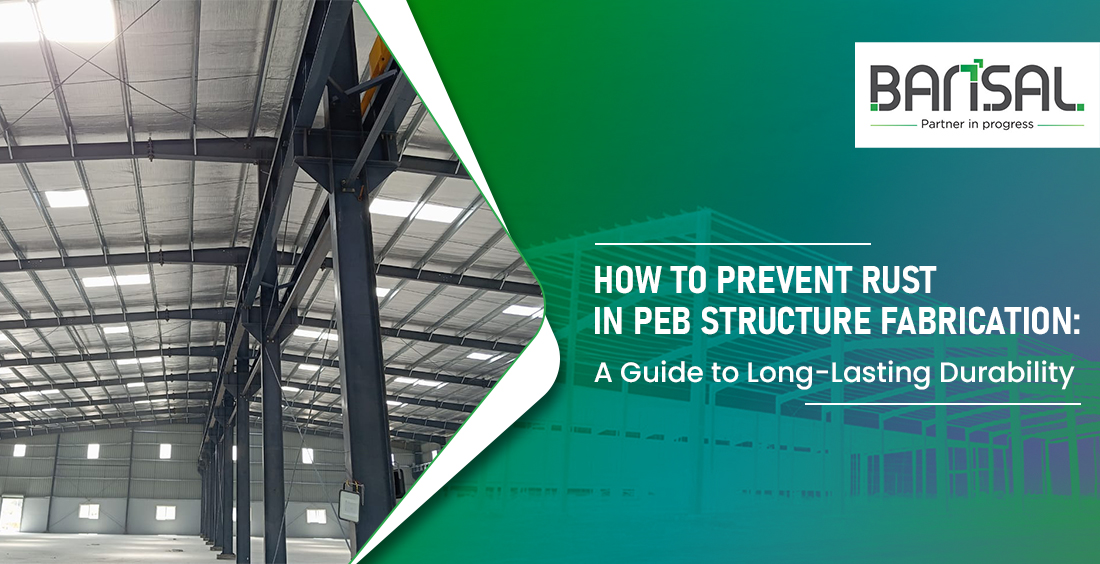
How to Prevent Rust in PEB Structure Fabrication: A Guide to Long-Lasting Durability
Posted on: Apr 20, 2026
When investing in industrial infrastructure, the true enemy isn't just time—it’s oxidation. In the world of PEB Structure Fabrication, rust acts as a silent destroyer that can compromise structural integrity long before the building reaches its intended lifespan. For business owners and project managers, understanding how to prevent corrosion is the difference between a facility that lasts 50 years and one that requires expensive structural reinforcements within a decade.
As leading peb manufacturers, we have refined the science of "corrosion-proofing" pre-engineered buildings to withstand India's diverse climates, from the humid coastal belts to the chemical-heavy industrial zones.
Why Rust is the Silent Threat to Industrial Infrastructure
Corrosion doesn't just look bad; it creates a structural domino effect. When steel oxidizes, it can expand up to ten times its original thickness, causing "rust-bursting" that weakens joints and compromises load-bearing capacities. From a financial perspective, the ROI of your pre-engineered building hinges on its durability. A structure that succumbs to rust leads to:
- Reduced Load Capacity: Thinning steel cannot support planned crane or solar loads.
- Safety Hazards: Compromised secondary members like purlins and girts can lead to roofing failures.
- Operational Downtime: Frequent repairs mean halting production or logistics.
How Rust Risks Vary Across Different Types of PEB Structures
Corrosion management is never a one-size-fits-all solution; it depends heavily on the architectural design and purpose of the facility. Different types of peb structures—such as clear-span industrial warehouses, multi-span manufacturing complexes, or open agricultural sheds—experience vastly different atmospheric exposures. For instance, open-sided structures are highly susceptible to wind-driven rain, whereas closed multi-story commercial complexes face moisture entrapment from ventilation systems. Understanding the structural geometry of the specific layout allows engineers to identify critical high-risk moisture zones and apply target-specific anti-corrosive coatings right at the drafting stage.
The Role of Material Selection in Quality PEB Structure Fabrication
The first line of defense begins in the blast furnace. High-quality PEB Structure Fabrication relies on steel that meets stringent Indian Standards. At the primary level, we utilize high-tensile steel conforming to IS 2062 for built-up sections, ensuring the raw material has the chemical composition to resist early-stage oxidation.
For roofing and cladding, the choice between Galvalume and Galvanized steel is critical. While traditional galvanizing uses a pure zinc coating, Galvalume—an alloy of 55% Aluminum, 43.4% Zinc, and 1.6% Silicon—offers superior barrier protection and heat reflectivity, especially in saline environments.
Surface Preparation: The Foundation of Corrosion Resistance
You can use the most expensive paint in the world, but if it is applied over mill scale or moisture, it will peel within months. Proper metal fabrication product standards dictate a rigorous surface preparation process:
- Sandblasting/Shot Blasting: Following IS 1477 (Part 1), surfaces are blasted to a "white metal" finish to create an anchor pattern for coatings.
- Chemical Cleaning: Removal of all oils, grease, and contaminants that interfere with chemical bonding.
- Immediate Priming: To prevent "flash rust," a primer must be applied immediately after cleaning in a controlled factory environment.
Advanced Coating Technologies Used by Leading PEB Manufacturers
Modern peb manufacturers no longer rely on simple red-oxide primers. Today, we use multi-layered defense systems:
- Zinc-Rich Epoxy Primers: These provide "sacrificial protection," where the zinc corrodes instead of the steel.
- Polyurethane (PU) Topcoats: Known for high UV resistance, PU paints prevent the "chalking" effect that exposes the primer to the elements.
- Specialized Anti-Corrosive Layers: For chemical plants or coastal sheds, we implement high-build epoxy coatings that create an impermeable barrier against corrosive gases.
Anti-Corrosive Protocols for Critical PEB Structure Components
A chain is only as strong as its weakest link, and a pre-engineered building is only as rust-resistant as its individual elements. Key peb structure components require distinct protective treatments during production. Primary frames (like heavy built-up columns and rafters) undergo rigorous mechanical shot-blasting before receiving zinc-rich epoxy primers. Meanwhile, secondary members (such as C and Z purlins) are typically pre-galvanized to protect their thin-gauge profiles. Even the smallest components, such as anchor bolts, sag rods, and EPDM-capped fasteners, must be heavily shielded, as localized rust on a single connection point can quickly migrate and weaken the entire load-bearing frame.
Design Fixes: Preventing Water Pooling in a Pre Engineered Building
Sometimes, rust isn't a material failure but a design flaw. Moisture is the catalyst for rust, and a well-engineered building is designed to shed water as quickly as possible:
- Optimal Slopes: Ensuring a minimum roof pitch that prevents "ponding".
- Gutters and Downspouts: Using oversized, high-quality gutters to handle peak monsoon discharge.
- Flashing and Trims: Precision-engineered flashing at joints and openings ensures that water never finds its way to the internal structural members.
High-Quality Metal Fabrication Product Standards: What to Look For
When evaluating components, use this checklist to ensure your metal fabrication product is truly rust-resistant:
- Galvanization Grade: Is it AZ150 or higher for Galvalume?
- Sealant Quality: Are the fasteners EPDM-capped to prevent "neck rust" at puncture points?
- IS Code Compliance: Does the fabrication follow IS 800 (General Construction) and IS 801 (Cold Formed)?
Maintenance Protocols for Rust-Free Industrial Sheds in 2026
Even the best-built structure needs a "health check". We recommend:
- Bi-Annual Inspections: Checking for scratches in the coating caused by debris or wind.
- Touch-up Strategies: Using cold-galvanizing sprays or matched PU paint to seal any exposed metal immediately.
- Debris Removal: Keeping gutters free of leaves and bird nests that trap moisture against the steel.
Rust Prevention Checklist (Position Zero Candidate)
| Component | Protection Method | Standard/Check |
| Primary Beams | Seven-tank Galvanizing / Epoxy Coating | IS 2062 |
| Roofing Panels | Galvalume (Al-Zn Alloy) | AZ150 Grade |
| Secondary Members | Pre-galvanized Z & C Purlins | IS 801 |
| Fasteners | EPDM Capped / Stainless Steel | Leak-proof seal |
Why Choose Bansal Poles?
At Bansal Poles Limited, we don't just build sheds; we engineer longevity. With over 40 years of expertise, we integrate a seven-tank galvanizing process - a rarity in the industry - that ensures every nook and cranny of your structure is shielded from the elements. We procure our steel from trusted giants like TATA and SAIL, ensuring that the foundation of your PEB Structure Fabrication is as pure as it is strong.
From our in-house design team to our 100% leak-proof standing seam systems, we manage the entire ecosystem to guarantee a maintenance-free life for your industrial assets.
Conclusion: Investing in Superior PEB Structure Fabrication
Frequently Asked Questions
With high-grade Galvalume and proper PEB Structure Fabrication, a building can easily last 30–50 years with minimal maintenance.
Yes, for roofing. Galvalume offers nearly double the corrosion resistance of traditional galvanized steel in most atmospheric conditions.
Not if it’s factory-coated with PU or high-build epoxy. Modern peb manufacturers provide coatings designed to last 10–15 years before a touch-up is needed.
Yes, but it's cost-intensive. It requires wire-brushing to IS 1477 standards and applying a zinc-rich cold-galvanizing primer.
Coastal areas (high salinity) and chemical industrial clusters (acidic rain) are high-risk zones that require specialized "Coastal Grade" coatings.
Absolutely. We tailor our coating thickness and material selection based on your specific site location and industrial usage.
High-quality peb structure fabrication eliminates rust risks by utilizing automated, factory-controlled welding and CNC plasma cutting. This ensures smooth, crevice-free joints where water cannot pool. Furthermore, applying protective zinc primers immediately after shot-blasting in a moisture-controlled factory environment blocks early-stage oxidation far better than on-site manual painting.
Yes. The structural configuration and environment play a massive role. Open-sided sheds face direct rain exposure, requiring heavy outer coatings, while chemical manufacturing units or cold storage facilities struggle with internal condensation, requiring specialized chemical-resistant or thermal-barrier linings.
Secondary structural members like purlins and girts are highly vulnerable due to their thinner gauge profiles if not properly pre-galvanized. Additionally, joints, connection splices, and roofing puncture points near fasteners are prone to localized moisture entrapment, making targeted factory sealing critical.
Comments (0)
Post Your Comment